
DHS Announces Significant Changes to International Student Admission Rules
The U.S. Department of Homeland Security (DHS) has published a final rule introducing significant changes to how international students are admitted and maintain their legal status in the United States.
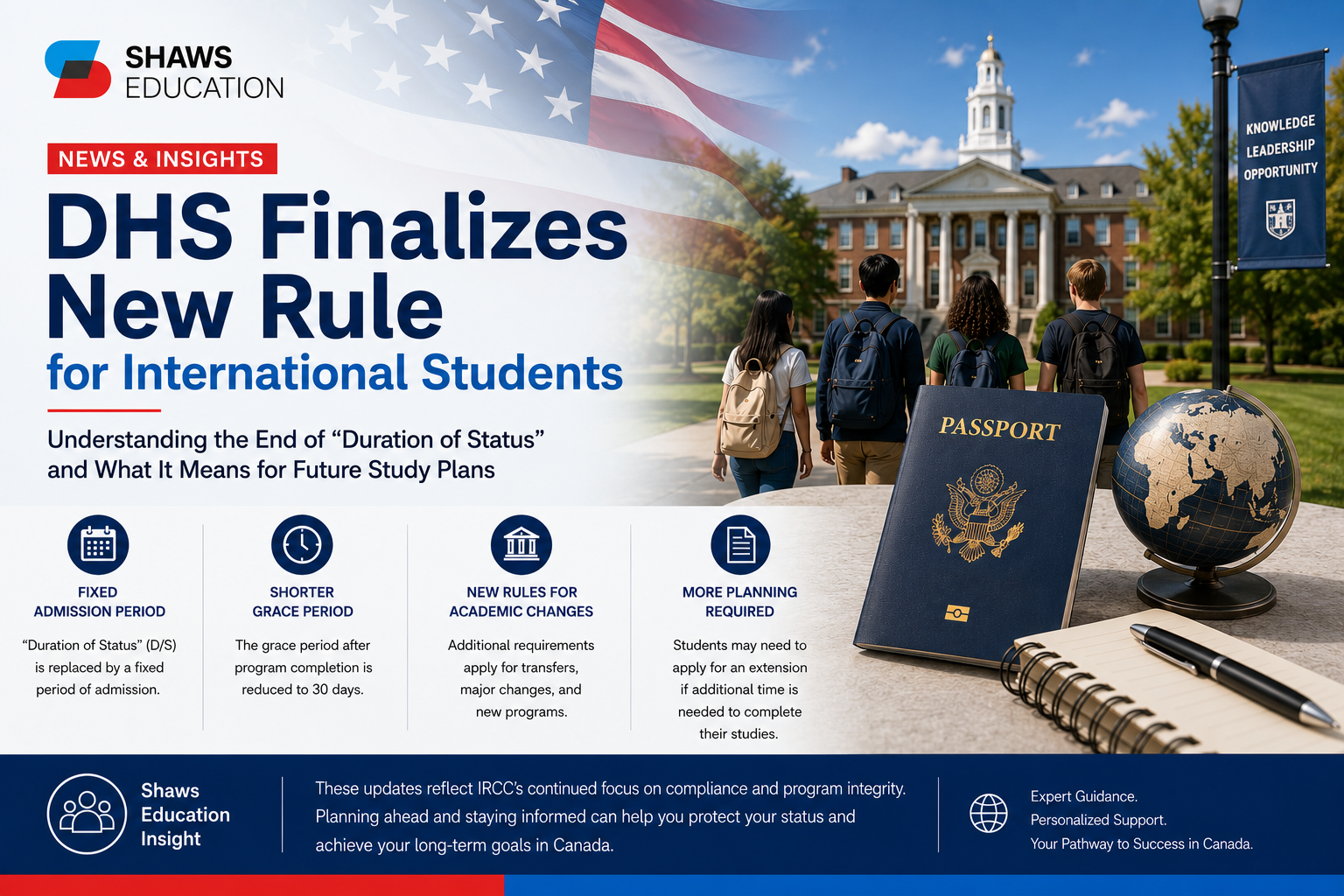
One of the most notable changes is the replacement of the long-standing “Duration of Status (D/S)” policy with a fixed period of admission. The rule is expected to take effect on September 15, 2026, following the required implementation period.
For international students considering studying in the United States, this update represents an important change in immigration administration and long-term academic planning.
Quick Summary
- Duration of Status (D/S) will be replaced by a fixed admission period.
- Students may need to apply for an extension if additional study time is required.
- The grace period after program completion will be shortened.
- Additional immigration procedures may apply when transferring schools or changing academic programs.
- Universities and international student offices are preparing guidance to help students adapt to the new requirements.
What’s Changing?
Fixed Admission Period
Previously, most F-1 students were admitted under the Duration of Status (D/S) framework, allowing them to remain in the United States as long as they maintained full-time student status and complied with immigration regulations.
Under the new rule, students will instead receive a specific admission end date based on their academic program. Students whose studies extend beyond that period may need to apply for an extension before their authorized stay expires.
Shorter Grace Period
The standard grace period following graduation will be reduced from 60 days to 30 days.
This means students will have less time to:
- prepare for departure;
- transfer to another academic program;
- apply for another immigration status; or
- begin employment under an eligible work authorization.
Planning ahead will become increasingly important.
Additional Requirements for Academic Changes
The regulation also introduces additional compliance requirements for certain academic changes, including:
- transferring to another institution;
- changing academic objectives;
- beginning a new degree program; and
- extending the expected completion date.
Students should consult their university’s international student office before making any significant academic or immigration decisions.
More Active Immigration Planning
The new framework places greater emphasis on maintaining accurate immigration records throughout a student’s academic journey.
Students enrolled in longer programs, graduate studies, or research-based degrees should monitor their admission period carefully and ensure any required extension applications are submitted before their authorized stay expires.
What Does This Mean for Future Students?
Although these changes introduce additional administrative requirements, the United States remains one of the world’s leading destinations for higher education.
The new rule does not reduce opportunities for international students. Instead, it places greater importance on proactive planning and maintaining compliance throughout the duration of study.
Students who understand the new requirements early will be better positioned to avoid unnecessary delays or immigration complications.
Shaws Education Insight
Immigration policies continue to evolve across major study destinations, making professional planning more important than ever.
At Shaws Education, we encourage students to evaluate not only academic programs but also the immigration framework, post-graduation opportunities, and long-term career pathways when choosing where to study.
Whether you are considering Canada, the United States, or another destination, staying informed about policy developments can help you make confident and well-prepared education decisions.
Need Personalized Study Abroad Advice?
Every student’s academic background, career goals, and immigration considerations are different.
If you are planning to study in the United States or Canada and would like guidance on selecting the right institution or understanding current immigration policies, the Shaws Education team is here to help. Contact Us.
Official Sources
This article is independently prepared by Shaws Education based on publicly available information released by the U.S. Department of Homeland Security (DHS), the Federal Register, and guidance published by U.S. universities’ international student offices. It is intended for informational purposes only.